An “alternative page with proper canonical tag” warning in Google Search Console (GSC) means a URL in your sitemap has a canonical tag pointing to a different URL. This tells Google that the linked URL is the preferred version of that content.
This warning is not necessarily an error. It is a notification that helps you verify whether your canonical tags are configured correctly.
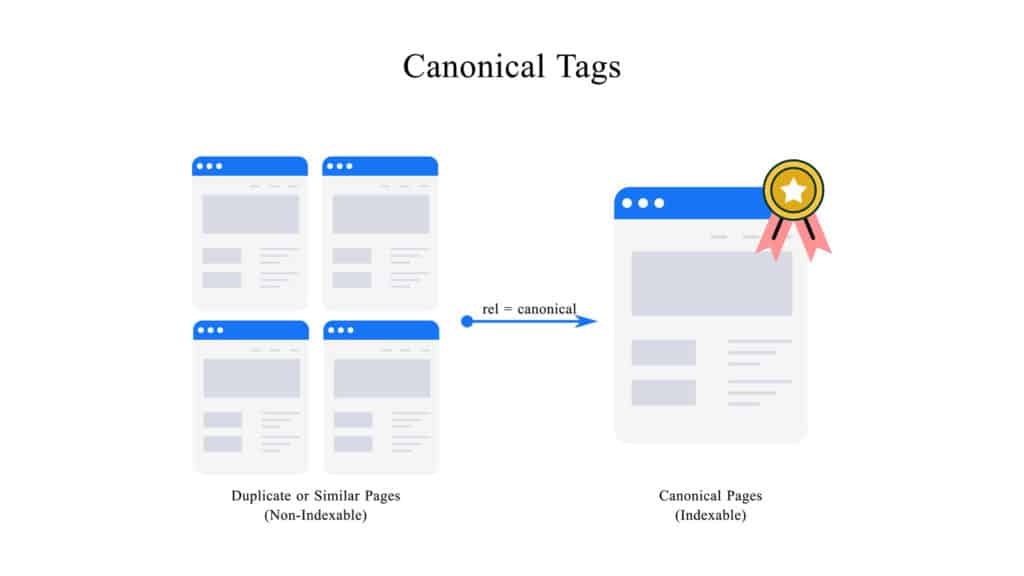
How to Fix Alternate Page with Proper Canonical Tag
Follow these steps to resolve the warning or confirm your canonical setup is correct:
1. Verify the Warning
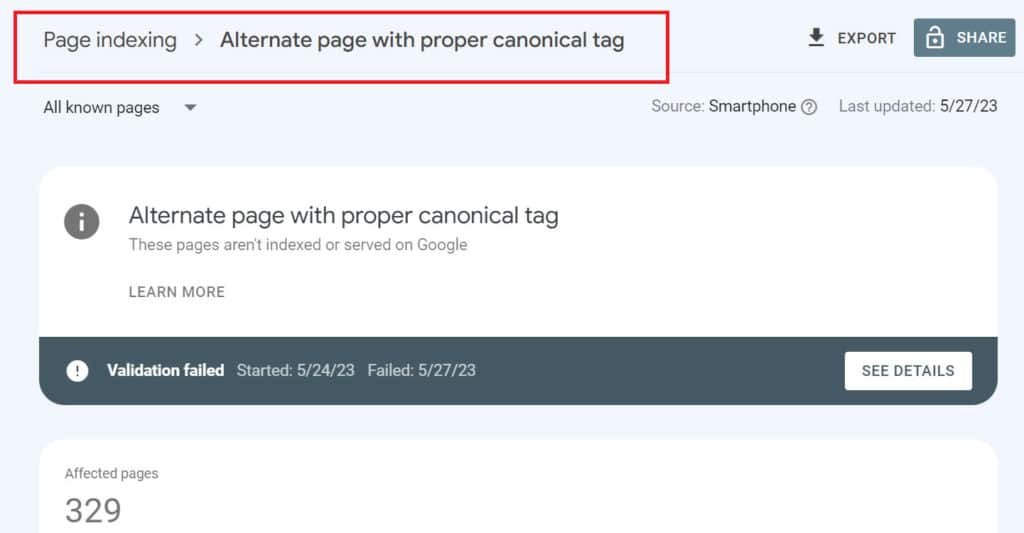
Check the flagged URL in Google Search Console. Visit the page, inspect the source code, and look for the canonical tag in the <head> section. It should look like this:
<link rel="canonical" href="https://example.com/preferred-url" />2. Determine If the Canonical Tag Is Correct

If the canonical tag points to a different URL, determine whether this is intentional. If the URL in the canonical tag is the preferred version of the content, no action is needed. The warning is simply informing you about the canonical relationship between the two URLs.
3. Update the Canonical Tag If Necessary

If the canonical tag points to the wrong URL, or if the original URL should be treated as the canonical version, update the tag to point to the correct URL. This can typically be done through your CMS or SEO plugin settings (such as Yoast in WordPress).
4. Remove Unnecessary Canonical Tags

If both URLs contain unique content and should be treated as separate pages, remove the canonical tag from the original URL to prevent it from being flagged as a duplicate content.
5. Update Your Sitemap
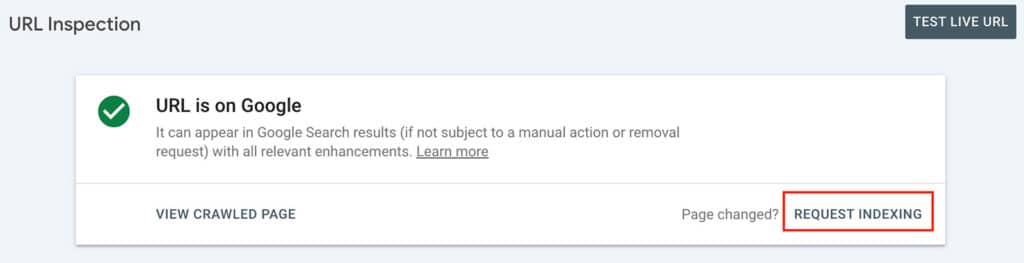
After updating or removing canonical tags, make sure your XML sitemap reflects those changes. Submit the updated sitemap to Google Search Console so Google can recrawl the affected pages.
6. Monitor Google Search Console
Continue monitoring GSC to confirm the warning has been resolved after making your changes.
Internal Linking Structure Issues
Your internal link architecture can directly contribute to canonical tag warnings and crawl budget issues. When your internal links point to non-canonical URLs instead of preferred versions, you send conflicting signals to search engines about which page should be indexed.
Common internal link structure problems that trigger canonical warnings include:
- Linking to URLs with tracking parameters, trailing slashes, or mixed-case variations instead of the clean canonical URL
- Navigation menus or footer links that reference outdated or duplicate versions of a page
- Breadcrumb trails or sidebar widgets that point to paginated or filtered versions of content
To optimize your internal links and align them with your canonical tag strategy:
Audit your internal links. Use a tool like Screaming Frog or Sitebulb to identify internal links pointing to non-canonical pages. Filter for any URL that returns an error status or redirects to a different destination than the one linked.
Standardize link targets. Every internal link should point directly to the canonical version of the page. Avoid linking to redirect chains, parameter-heavy URLs, or alternate versions that carry a canonical tag pointing elsewhere.
Consolidate link equity. When multiple internal links spread across duplicate or near-duplicate URLs, the link equity is diluted. Consolidating those links to the single canonical URL strengthens that page’s authority and helps search engines prioritize it during crawling.
Protect your crawl budget. Every time Googlebot follows an internal link to a non-canonical URL, it wastes crawl budget on a page that will ultimately defer to another version. Cleaning up your internal link structure ensures crawlers spend time on the pages that matter.
FAQs
What is a proper canonical tag?
How do I fix “alternative page with proper canonical tag”?
Conclusion
By resolving the “alternative page with proper canonical tag” warning, aligning your internal link structure with your canonical strategy, and monitoring for crawl budget issues or error status flags in GSC, you help search engines understand exactly which version of each page to index and rank.
Published on: 2023-03-31
Updated on: 2026-04-02
